


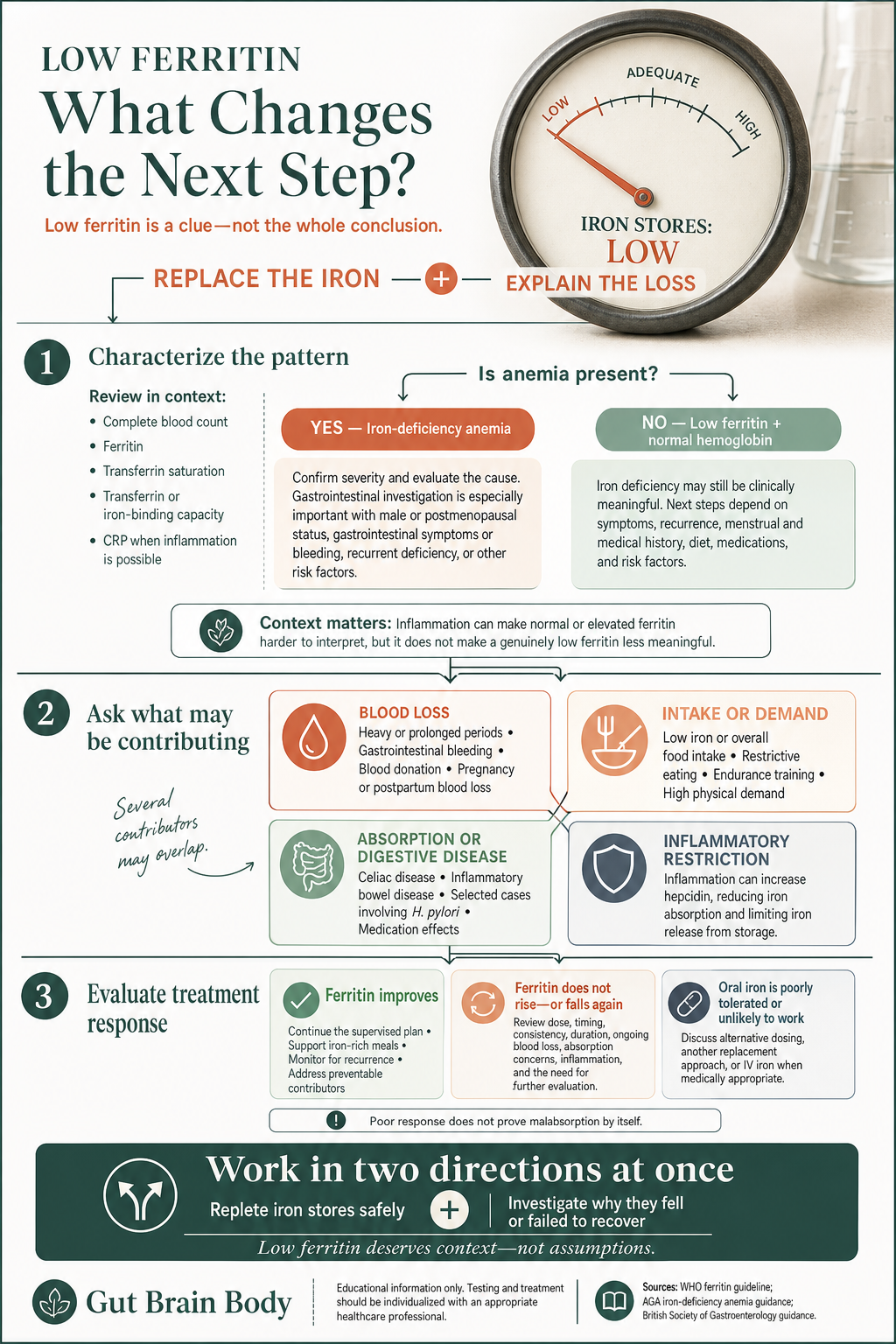
Low ferritin and fatigue can occur together even when hemoglobin is normal. Rebuilding iron stores starts with understanding why they became depleted, whether from low intake, ongoing blood loss, difficulty absorbing iron, or several factors working together.
If your ferritin stays low, drops again after treatment, or occurs alongside bloating, bowel changes, or poor tolerance to iron supplements, those patterns can help guide a more complete evaluation.
The key question: What is causing your iron stores to fall, and what would help restore them?
Iron deficiency can develop gradually. Your body may draw from stored iron for months or years before hemoglobin falls enough to meet criteria for anemia. This means you can have low ferritin, normal hemoglobin, and still have a clinically meaningful pattern worth investigating.
The goal is not to assume that every symptom is caused by ferritin. Fatigue, hair changes, mood changes, digestive symptoms, and poor exercise recovery can have many contributors. Low ferritin is still an important clue. Good care means placing that clue in the context of your health history, symptoms, diet, medications, lifestyle, and laboratory findings.
What ferritin tells you about iron stores
Ferritin is a protein that helps store iron. In general, a genuinely low ferritin level is strong evidence that iron stores are depleted. [1]
This matters because iron has roles beyond making hemoglobin. It contributes to oxygen transport, energy metabolism, neurologic function, immune function, and tissue repair. When iron stores fall, the body may maintain hemoglobin for a period of time, but it has less reserve to draw from.
This is the difference between:
- Iron deficiency without anemia, sometimes called non-anemic iron deficiency
- Iron-deficiency anemia, in which iron deficiency has progressed enough to reduce hemoglobin production
That distinction matters clinically, particularly when evaluating low ferritin and fatigue.
The evidence for investigating gastrointestinal blood loss or disease is strongest in people with confirmed iron-deficiency anemia, especially men and postmenopausal women. Isolated low ferritin with normal hemoglobin may still deserve attention, but the evaluation is usually individualized according to symptoms, medical and menstrual history, diet, medications, risk factors, and response to treatment. [2,3]
Can inflammation affect ferritin results?
Ferritin is also an acute-phase reactant. Inflammation can raise ferritin, which means a normal or elevated ferritin does not always rule out iron deficiency.
However, inflammation does not make a low ferritin less meaningful. Low ferritin in the setting of inflammation remains strong evidence that iron stores are depleted. When inflammation is possible, ferritin is best interpreted alongside a complete blood count, transferrin saturation, and the broader inflammatory context, such as CRP results or a known inflammatory condition. [1]
There is no single ferritin number that represents “optimal” for every person. Interpretation depends on whether anemia or inflammation is present, age, pregnancy status, medical conditions, symptoms, and the rest of the iron panel.
What causes low ferritin and fatigue?
Diet may be part of the story, but low iron stores can result from several overlapping patterns:
- Ongoing blood loss
- Heavy or prolonged menstrual bleeding
- Pregnancy, postpartum recovery, or frequent blood donation
- Low dietary iron intake or low overall food intake
- Restrictive eating patterns or insufficient energy availability
- Poor iron absorption
- Celiac disease or inflammatory bowel disease
- Medication effects
- H. pylori-associated gastritis in selected cases
- Inflammation that restricts iron availability
- Endurance training or high physical demand
- A combination of several smaller factors rather than one obvious cause
This is why ferritin should not be treated as a single-lab problem. A better question is: What does the timeline suggest?
What changed before ferritin dropped? Did symptoms begin after pregnancy, a stressful period, a dietary change, a new training program, years of heavy periods, frequent blood donation, gastrointestinal illness, medication use, or a change in appetite?
Which symptoms travel together? Does fatigue occur with digestive discomfort, irregular stools, painful or heavy cycles, appetite changes, sleep disruption, weight changes, or difficulty recovering from exercise?
A functional nutrition evaluation can help organize these patterns across symptoms, diet, food tolerance, medications and supplements, lifestyle, prior testing, and health history. The purpose is not to assume that every symptom has one cause. It is to identify which questions and findings are most likely to change the next step.
Heavy menstrual bleeding can lower ferritin, but should not be assumed
For menstruating people, heavy or prolonged menstrual bleeding is one of the most common reasons ferritin falls. [4]
Menstruation should still be assessed rather than used as a blanket explanation. Questions worth discussing with a clinician include:
- How many days does bleeding last?
- Are cycles unusually frequent?
- Do you experience flooding or need to change pads or tampons every hour?
- Are there large clots?
- Is there bleeding between periods or after sex?
- Did bleeding change after pregnancy, insertion of an IUD, a medication change, or a gynecologic diagnosis?
- Is there a history of fibroids, endometriosis, adenomyosis, miscarriage, postpartum hemorrhage, or a bleeding disorder?
Nutrition and iron replacement can be helpful, but they do not correct ongoing heavy blood loss. If bleeding is recurrent, worsening, or disruptive, gynecologic evaluation matters. Readers with broader cycle or hormonal concerns may also find the Hormonal Issues resource helpful as a starting point for understanding how these concerns can fit into a larger evaluation.

How digestive conditions can contribute to low ferritin
Sometimes people are eating iron-containing foods and taking supplements consistently, but ferritin still does not rise as expected. This is a reason to review adherence, dose and timing, treatment duration, ongoing blood loss, absorption, inflammation, and whether the diagnosis has been fully characterized.
If low ferritin occurs alongside bloating, abdominal pain, diarrhea, constipation, reflux, food intolerance, unexplained weight change, or recurrent nutrient deficiencies, digestive symptoms may deserve their own evaluation. Gut Brain Body’s resource on Gut Health and Digestive Issues provides additional context for that broader pattern.
Celiac disease and iron absorption
Celiac disease can contribute to iron deficiency because intestinal damage can impair absorption. It may present with classic gastrointestinal symptoms, but it can also appear as iron deficiency, recurrent anemia, unexplained nutrient deficiencies, fatigue, or a family history of celiac or autoimmune disease. [5]
First-line celiac testing usually includes tissue transglutaminase IgA, or tTG-IgA, plus total IgA while the person is still eating gluten. If IgA deficiency is present, appropriate IgG-based testing may be used. [5]
If celiac disease is a meaningful question, it is generally important not to begin a gluten-free diet before testing unless medically necessary. Removing gluten first can reduce the accuracy of blood testing and biopsy findings. Learn more in Celiac Testing: What to Know Before Going Gluten-Free.
H. pylori and upper gastrointestinal patterns
H. pylori is a stomach infection that can contribute to gastritis and, in selected situations, iron deficiency. It is not the explanation for every case of low ferritin.
Testing may be worth discussing with a clinician when iron-deficiency anemia is unexplained, when upper gastrointestinal symptoms or ulcer risk are present, or when an initial gastrointestinal evaluation has not identified another cause. [2]
Inflammation and hepcidin
Hepcidin is one of the body’s key iron-regulating hormones. When inflammatory signaling increases, hepcidin can rise. Higher hepcidin reduces intestinal iron absorption and limits the release of stored iron into circulation. [6]
This helps explain why someone can have low circulating iron availability even when ferritin is not clearly low. It also explains why ferritin, transferrin saturation, complete blood count findings, inflammatory markers, symptoms, and known inflammatory conditions should be interpreted together.
Hepcidin is a useful clinical concept, but routine hepcidin testing is not yet standardized for broad outpatient use. The more practical question is usually:
Could inflammation, chronic disease, infection, or intestinal disease be making iron less available or harder to absorb?
What should be included in a low ferritin evaluation?
A useful evaluation should include more than one laboratory value. The appropriate workup depends on whether anemia is present, symptom severity, age, pregnancy status, menstrual and gastrointestinal history, medications, dietary intake, previous treatment, and other risk factors.
Standard labs that can clarify the pattern
Depending on the situation, useful foundational data may include:
- Complete blood count, including hemoglobin, MCV, MCH, and RDW
- Ferritin
- Serum iron and transferrin saturation
- Total iron-binding capacity or transferrin
- CRP or another inflammatory marker when inflammation is possible
- Vitamin B12 and folate when dietary insufficiency, fatigue, neurologic symptoms, or macrocytosis are present
- Thyroid testing when symptoms or history support that question
- Celiac testing when indicated
- Pregnancy testing or pregnancy-specific evaluation when relevant
The value of these labs is not limited to whether one result is flagged high or low. The pattern matters.
For example, low ferritin with low transferrin saturation and elevated RDW tells a different story than normal ferritin with low transferrin saturation and elevated CRP. One pattern may indicate depleted iron stores. Another may suggest inflammation-related iron restriction, although mixed patterns can occur. Both deserve attention, but the next step may differ.
Targeted testing can add useful context
Targeted testing is most useful when it addresses a defined clinical question and the result could reasonably change nutrition strategy, referral, monitoring, or follow-up.
- Fecal calprotectin may help assess intestinal inflammation when chronic diarrhea, urgency, nighttime stools, blood or mucus in stool, abdominal pain, weight loss, or concern for inflammatory bowel disease is present. It does not diagnose inflammatory bowel disease by itself, but it can help determine whether additional gastrointestinal evaluation is warranted. [7]
- H. pylori testing may be appropriate in selected cases of unexplained iron-deficiency anemia or upper gastrointestinal symptoms. The type of test and timing can be affected by medications such as proton pump inhibitors, antibiotics, and bismuth, so preparation should be reviewed with a clinician. [2]
- Breath testing for SIBO may add context when compatible symptoms occur alongside meaningful risk factors, such as altered gastrointestinal anatomy or a major motility disorder. A positive breath test does not prove that SIBO caused low ferritin and should be interpreted with symptoms, risk factors, and the broader clinical picture. [8]
Like any testing, targeted tests can produce false-positive, false-negative, or nonspecific findings. Results should not be used in isolation to justify unnecessary restrictive diets, supplements, or antimicrobial treatment. The goal is not to order every available test. It is to identify what information could meaningfully change the plan without delaying necessary medical evaluation.
Evidence-based nutrition strategies for rebuilding iron stores
Food matters, especially for supporting long-term iron status and helping prevent recurrence. Food alone may not be enough when the iron deficit is substantial, bleeding is ongoing, absorption is impaired, or anemia is present.
Build meals around iron-containing foods
Heme iron from animal foods is generally absorbed more efficiently than non-heme iron from plant foods.
Iron-containing foods include:
- Beef, lamb, bison, and other meats
- Poultry and seafood
- Sardines, clams, oysters, and mussels
- Lentils, beans, tofu, tempeh, and edamame
- Pumpkin seeds and other seeds
- Iron-fortified grains and cereals
- Dark leafy greens, although iron content and absorption vary
Make iron-containing meals practical to prepare
Knowing which foods contain iron is only useful if those foods can be prepared consistently. A versatile skillet can make it easier to cook meat, seafood, beans, lentils, tofu, and vegetables without requiring separate cookware for each ingredient. When choosing one, consider a size that fits your household, compatibility with your cooking surface, and whether you are comfortable with the cleaning and seasoning required for cast iron.
As an Amazon Associate I earn from qualifying purchases.
The Lodge 10.25-Inch Cast Iron Skillet is one durable example for preparing these kinds of meals. It is an optional kitchen tool rather than a treatment for low ferritin, and it does not replace an appropriate evaluation or clinician-directed iron replacement when needed.
The larger goal is to create meals you can repeat consistently while maintaining enough variety to meet your broader nutritional needs.
Vitamin C-rich foods can improve non-heme iron absorption within a meal. Citrus, berries, kiwi, peppers, tomatoes, broccoli, and potatoes can all be useful additions. [9]
Tea and coffee can reduce non-heme iron absorption when consumed with an iron-focused meal or supplement. Calcium supplements and some meal components may also affect absorption when taken at the same time. [9]
This does not mean you need to fear coffee, dairy, beans, or whole grains. When you are actively rebuilding iron stores, thoughtful timing may help while preserving nutritional adequacy and a varied diet.
Oral iron can work, but the regimen needs to fit the person
Oral iron is appropriate first-line treatment for many people. Iron Bis-glycinate is commonly used, has less side effects, is widely available, and is cost-effective. However it’s important to be aware of the side effects in case they do occur.
Common side effects include:
- Nausea
- Constipation
- Loose stools
- Abdominal discomfort
- Dark stools
For some people, once-daily or alternate-day dosing may be easier to tolerate and may improve consistency. Alternate-day treatment is reasonable to discuss with a clinician, especially when daily dosing causes gastrointestinal symptoms. It should not be treated as universally superior, particularly when more significant anemia requires closer monitoring or a different replacement strategy. [10,11]
Vitamin C-containing foods can support non-heme iron absorption. However, routine vitamin C supplements with every iron dose do not appear necessary for everyone, since clinical trial evidence has not consistently shown better hemoglobin or ferritin outcomes from adding vitamin C tablets to oral iron. [12]
Iron can interact with medications, including levothyroxine and certain antibiotics. Timing should be reviewed with a pharmacist or prescribing clinician. People with conditions associated with iron overload should not take iron unless deficiency has been appropriately established and treatment is medically supervised.
Iron supplements should always be stored safely away from children because accidental overdose can be dangerous.
When might IV iron be appropriate?
IV iron is a medical treatment, not a failure.
It may be appropriate when oral iron is not tolerated, does not improve iron status adequately, is unlikely to be absorbed, or when a condition such as active inflammatory bowel disease complicates oral replacement. The decision depends on the severity of deficiency or anemia, symptoms, underlying conditions, response to oral treatment, and the need for timely repletion. [10]
IV iron can replenish stores efficiently, but it does not explain why iron became depleted. If the underlying driver is heavy bleeding, gastrointestinal disease, malabsorption, inflammation, or recurrent blood loss, that issue still needs to be addressed.
When should medical evaluation not wait?
Seek timely medical evaluation if you have:
- Black, tarry stools or visible blood in stool
- Vomiting blood or coffee-ground material
- Severe abdominal pain
- Fainting, chest pain, shortness of breath at rest, or a rapid heartbeat
- Significant weakness or rapidly worsening fatigue
- Unexplained weight loss
- Persistent diarrhea, nighttime diarrhea, or blood in stool
- New iron-deficiency anemia if you are male or postmenopausal
- Pregnancy or possible pregnancy with low iron or anemia
- Heavy menstrual bleeding that is severe, worsening, or affecting daily life
- Poor response to oral iron despite consistent, appropriately supervised use
- A family history of celiac disease, inflammatory bowel disease, colorectal cancer, or bleeding disorders
In adults with confirmed iron-deficiency anemia, especially men and postmenopausal women, clinicians commonly investigate for gastrointestinal blood loss or gastrointestinal disease. The American Gastroenterological Association recommends bidirectional endoscopy for asymptomatic men and postmenopausal women with iron-deficiency anemia and suggests it for asymptomatic premenopausal women with iron-deficiency anemia rather than iron therapy alone. [2]
This recommendation is strongest for iron-deficiency anemia, not simply low ferritin with normal hemoglobin. Evaluation of non-anemic iron deficiency should be individualized based on symptoms, recurrence, risk factors, and clinical history.
The bottom line on low ferritin and fatigue
Low ferritin is not something to dismiss, but it should not become a one-lab explanation for every symptom.
The most useful approach is to work in two directions at once:
- Replete iron stores safely and effectively.
- Investigate why iron stores fell or failed to recover.
Sometimes the answer is low intake relative to need. Sometimes it is heavy menstrual bleeding, postpartum depletion, blood donation, medication effects, digestive disease, inflammation, or poor absorption. Often, several factors overlap.
The goal is not to chase a hidden cause at all costs. It is to understand your pattern well enough that the next steps are more informed, more personalized, and more likely to hold up over time.
Looking for a deeper evaluation of low ferritin and persistent symptoms?
At Gut Brain Body, we work with people who have ongoing symptoms, recurrent nutrient issues, digestive concerns, fatigue, complex food patterns, and health questions that have not been fully answered by generic advice.
A comprehensive nutrition evaluation may include your health timeline, symptoms, dietary patterns, food tolerance, nutritional adequacy, medications and supplements, bowel function, sleep, stress, activity, appetite and weight changes, prior diagnoses and records, standard labs, nutrient status, and targeted testing when it is appropriate and likely to add useful context.
This work is designed to identify patterns worth investigating, clarify which questions could change the plan, and build practical next steps in coordination with your medical care. Learn more about Functional Nutrition Services.
If you are ready to look at the full clinical and nutrition picture, schedule or get started with Gut Brain Body.
This article is for educational purposes and does not provide a diagnosis or replace individualized medical evaluation or treatment. Nutrition support can help organize relevant information and develop practical strategies in coordination with your medical care.
References
1. World Health Organization. WHO guideline on use of ferritin concentrations to assess iron status in individuals and populations. https://www.who.int/publications/i/item/9789240000124
2. Ko CW, Siddique SM, Patel A, et al. AGA Clinical Practice Guidelines on the Gastrointestinal Evaluation of Iron Deficiency Anemia. Gastroenterology. 2020;159(3):1085-1094. https://www.gastrojournal.org/article/S0016-5085(20)34847-2/fulltext
3. Snook J, Bhala N, Beales ILP, et al. British Society of Gastroenterology guidelines for the management of iron deficiency anaemia in adults. Gut. 2021;70(11):2030-2051. https://gut.bmj.com/content/70/11/2030
4. American College of Obstetricians and Gynecologists. Heavy Menstrual Bleeding. https://www.acog.org/womens-health/faqs/heavy-menstrual-bleeding
5. Rubio-Tapia A, Hill ID, Semrad C, Kelly CP, Lebwohl B. American College of Gastroenterology Guidelines Update: Diagnosis and Management of Celiac Disease. American Journal of Gastroenterology. 2023;118(1):59-76. https://journals.lww.com/ajg/fulltext/2023/01000/american_college_of_gastroenterology_guidelines.13.aspx
6. Ganz T, Nemeth E. Hepcidin and iron homeostasis. Biochimica et Biophysica Acta. 2012;1823(9):1434-1443. https://www.sciencedirect.com/science/article/pii/S016748891200109X
7. Walsham NE, Sherwood RA. Fecal calprotectin in inflammatory bowel disease. Clinical and Experimental Gastroenterology. 2016;9:21-29. https://www.ncbi.nlm.nih.gov/pmc/articles/PMC4734737/
8. Pimentel M, Saad RJ, Long MD, Rao SSC. ACG Clinical Guideline: Small Intestinal Bacterial Overgrowth. American Journal of Gastroenterology. 2020;115(2):165-178. https://journals.lww.com/ajg/fulltext/2020/02000/acg_clinical_guideline__small_intestinal_bacterial.9.aspx
9. Hurrell R, Egli I. Iron bioavailability and dietary reference values. American Journal of Clinical Nutrition. 2010;91(5):1461S-1467S. https://academic.oup.com/ajcn/article/91/5/1461S/4597406
10. DeLoughery TG, Jackson CS, Ko CW, Rockey DC. AGA Clinical Practice Update on Management of Iron Deficiency Anemia: Expert Review. Clinical Gastroenterology and Hepatology. 2024;22(8):1575-1583. https://www.cghjournal.org/article/S1542-3565(24)00170-2/fulltext
11. Stoffel NU, Zeder C, Brittenham GM, Moretti D, Zimmermann MB. Iron absorption from supplements is greater with alternate day than with consecutive day dosing in iron-deficient anemic women. Haematologica. 2020;105(5):1232-1239. https://haematologica.org/article/view/9379
12. Li N, Zhao G, Wu W, et al. The efficacy and safety of vitamin C for iron supplementation in adult patients with iron deficiency anemia: A randomized clinical trial. JAMA Network Open. 2020;3(11):e2023644. https://jamanetwork.com/journals/jamanetworkopen/fullarticle/2772395