

When people search for a dementia prevention diet, they are often hoping for one clear answer: a specific food, supplement, exercise routine, or “brain food” that will keep memory sharp for life.
The more useful answer is both hopeful and realistic. Brain health is shaped by many factors over time. Physical activity, cardiovascular health, dietary patterns, tobacco use, social environment, education, and other life experiences can all influence dementia risk at a population level. [1]
This gives you more than one place to begin. A supportive approach to cognitive health looks less like a quick fix and more like tending a garden. Over time, you create conditions that support resilience: regular movement, nourishing meals, healthy blood vessels, meaningful routines, social connection, and appropriate medical care.
What Does Dementia Risk Reduction Mean?
Dementia is an umbrella term for conditions that affect memory, thinking, daily functioning, and independence. Alzheimer’s disease is one cause of dementia, but it is not the only one.
Risk reduction means working with factors that may influence the likelihood of cognitive decline over time. It is a practical, long-term approach rather than a guarantee.
Large public-health analyses estimate that up to 45% of dementia cases could be statistically attributable to selected modifiable risk factors across the population. [1] This estimate is encouraging because it highlights areas where health-supporting action may matter.
The percentage is a population estimate rather than a prediction of any one person’s outcome. These models include overlapping risk factors, while each person brings a different combination of genetics, health history, environment, and life experience.
The practical message remains useful: supporting your overall health can also support your brain.
For personalized help connecting nutrition, digestive symptoms, energy, mood, and cognitive concerns, explore our Functional Nutrition overview.
Why Brain Health Is Bigger Than One Food
The brain depends on the rest of the body. It needs steady blood flow, energy, sleep, sensory input, physical activity, stimulation, and connection with the world around you.
That is why dementia-risk discussions often include:
- Physical activity
- Blood pressure and cardiovascular health
- Diabetes management
- Tobacco use
- Harmful alcohol use
- Dietary patterns
- Hearing, mood, and social factors
- Education and lifelong learning
Some of these factors have stronger research support than others. Some are associated with dementia risk in observational studies, while others have been tested in clinical trials using cognitive scores rather than dementia diagnoses.
That distinction helps us interpret the research thoughtfully. An association can point toward useful habits while leaving room for other explanations. For example, people who are more active or eat differently may also differ in baseline health, education, income, social engagement, or early changes in brain function.
The practical takeaway is positive: a range of everyday habits can work together to support whole-person health.
Dementia Prevention Diet: Focus on the Overall Pattern
Nutrition is a natural place to focus because food is part of daily life. The most useful approach is usually a sustainable eating pattern rather than a search for one perfect food.
A supportive dietary pattern may include:
- A wide variety of vegetables, fruits, legumes, nuts, seeds, and whole grains
- Fiber-rich plant foods that fit your digestion and nutritional needs
- Adequate protein and energy throughout the day
- Minimally processed foods that you enjoy and can prepare consistently
- Fermented foods when they are comfortable and appropriate for you
- Healthy fats and satisfying meals
- Enough variety to support plant diversity over the course of a week
These elements can fit within many dietary traditions and cultural food patterns. A brain-supportive eating pattern can be flexible, enjoyable, and responsive to your individual needs.
The MIND Diet
The MIND diet, short for Mediterranean-DASH Intervention for Neurodegenerative Delay, is an eating plan designed to support brain health and reduce the risk of cognitive decline. It combines elements of the Mediterranean and DASH diets, focusing on nutrient-dense foods like leafy green vegetables, berries, nuts, whole grains, beans, fish, and olive oil. The diet encourages limiting red meats, butter, sweets, cheese, and fried or fast foods, which are associated with poorer brain health over time.
Research suggests that those who closely follow the MIND diet may experience slower cognitive aging and a reduced risk of developing Alzheimer’s disease. While these findings come primarily from observational studies, they indicate that a pattern of healthy eating can contribute to long-term brain function. Choosing foods rich in antioxidants and healthy fats helps protect the brain from inflammation and oxidative stress, which are linked to neurodegenerative conditions.
Rather than focusing on any single “superfood,” the MIND diet emphasizes consistency in overall dietary habits. Incorporating these foods into your regular meals and snacks, such as adding blueberries to breakfast, swapping butter for olive oil, or including a serving of leafy greens daily, can make the pattern sustainable. One meal alone won’t determine brain health, but small, steady choices build a foundation for long-term cognitive wellness [4].
Build a Pattern That Works in Real Life
Nutrition works over weeks and months rather than in a single meal. Consider whether your meals are regular, balanced, satisfying, and varied.
Useful questions include:
- Am I eating enough energy and protein?
- Do I have a range of plant foods in my routine?
- Can I include fiber-rich foods in ways that feel comfortable for my digestion?
- Do fermented foods, when included, fit my preferences and tolerance?
- Are meals built around foods I genuinely enjoy?
- Are digestive symptoms making it difficult to eat well?
- Are restrictive food rules creating stress, fear, or nutritional gaps?
A nutrition plan is most valuable when it helps you feel nourished, satisfied, and able to participate in daily life. Flexibility and practical support often make healthy routines easier to sustain.
For more support with digestive symptoms, food tolerance, and gut-supportive nutrition, visit Gut Health and Digestive Issues.

The Role of Physical Activity
Physical activity is one of the most practical places to begin because it supports far more than cognitive health. Movement can benefit cardiovascular fitness, blood sugar regulation, mood, balance, strength, sleep, and daily function.
Observational research has found that people with higher physical activity levels tend to have a lower risk of dementia and Alzheimer’s disease. [2] Some of that association may also reflect differences in baseline health or early, undiagnosed cognitive changes.
Even with those research limitations, movement remains a strong foundation for whole-body health.
What Can Movement Look Like?
You do not need to train for a marathon or purchase enough workout equipment to open a small gym in your garage.
A sustainable routine might include:
- Brisk walking, cycling, swimming, dancing, or another aerobic activity you enjoy
- Strength-focused activity that supports muscle and daily function
- Balance and mobility work, especially as you age
- Breaking up long periods of sitting
- Activities that add purpose or connection, such as gardening, walking with a friend, or joining a class
The best activity plan is usually the one you can repeat. Consistency tends to be more valuable than an intense routine that is difficult to maintain.
If joint pain, balance concerns, cardiovascular disease, or prolonged inactivity make exercise difficult, ask your healthcare team what type of movement is appropriate for you.
Multidomain Programs: Why the Combination May Matter
One of the most interesting areas of research is the multidomain approach.
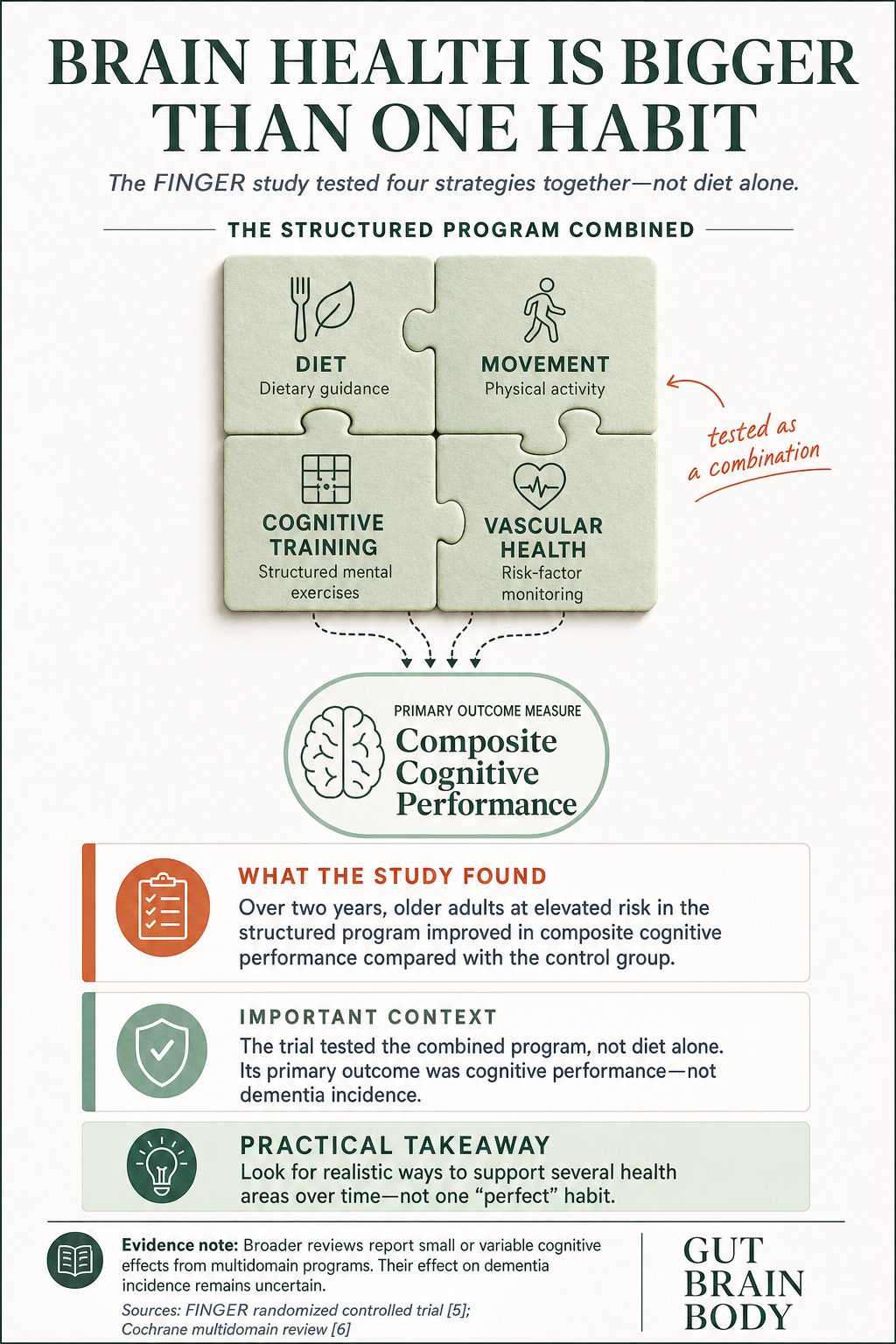
The Finnish Geriatric Intervention Study to Prevent Cognitive Impairment and Disability, often called the FINGER study, combined dietary guidance, physical activity, cognitive training, and vascular-risk monitoring in older adults at elevated risk. Over two years, participants in the structured program improved in composite cognitive performance compared with the control group. [5]
This result reflects an important real-world idea: the brain does not exist in isolation.
The FINGER study evaluated a combination of strategies rather than diet alone, and its primary outcome was cognitive performance rather than dementia incidence. Larger reviews of multidomain interventions have found small or variable effects on cognitive outcomes, while their effect on dementia incidence remains uncertain. [6]
A combined strategy may still be more practical than asking one behavior to do all the work. You can begin by identifying one or two areas where support would make the biggest difference. For one person, that may be a regular walking routine. For another, it may be eating more consistently, addressing blood pressure, or seeking support for sleep, mood, or digestive symptoms.
What About Supplements?
Nutrients are essential, and targeted supplementation may be appropriate when a deficiency, dietary gap, medication-related need, or specific medical concern has been identified.
For routine over-the-counter supplements marketed to prevent cognitive decline, evidence reviews have found limited or low-strength support for products such as vitamin E, omega-3 fatty acids, B vitamins, and multivitamins in people without dementia. [7]
The most useful supplement plan is usually an individualized one. If you take supplements because of fatigue, digestive concerns, dietary restriction, low appetite, medication effects, or a diagnosed deficiency, bring the full list to your healthcare team.
A targeted plan can help match the supplement, dose, and duration to your actual needs while accounting for medications and health conditions.
Practical Steps to Discuss With Your Healthcare Team
1. Build a Movement Routine You Can Maintain
Choose activities that feel realistic for your body and current fitness level. Walking, strength work, group exercise, gardening, and active hobbies can all contribute to a more active week.
2. Look at Your Eating Pattern as a Whole
Instead of focusing on one food, zoom out. Consider meal regularity, protein, fiber-rich plant foods, food variety, hydration, enjoyment, and digestive comfort.
If cooking, shopping, appetite, digestion, or food restrictions are getting in the way, those barriers are worth addressing directly.
3. Keep Cardiovascular Health on the Radar
The FINGER study included vascular-risk monitoring as part of its multidomain program. [5] Blood pressure, blood sugar, cholesterol, medication adherence, and other health factors are important topics to review with your medical team.
Blood-vessel care may not have the marketing appeal of a trendy powdered mushroom blend, but it matters. You can learn more about related concerns through our Cardiometabolic Issues services.
4. Seek Support for Tobacco Cessation
Tobacco use is among the modifiable factors included in major dementia-risk frameworks. [1] Stopping tobacco use supports health in many ways, and evidence-based support can make the process more manageable. Your healthcare team can help you explore appropriate options.
5. Avoid Hazardous or Harmful Alcohol Use
Harmful alcohol use is another factor included in dementia-risk discussions. [1] If alcohol feels difficult to reduce, affects sleep or mood, or has become part of coping with stress, support is available. This is a health conversation, not a moral failing.
6. Support Mood, Hearing, and Social Connection
Mood, sensory health, and connection with other people are important parts of a meaningful, engaged life. If low mood, hearing difficulty, isolation, or cognitive concerns are affecting daily life, discuss them with an appropriately qualified professional. Our Brain and Mood Issues services may also be a helpful place to begin.
7. Think in Combinations
A balanced meal, a walk after dinner, support for blood pressure management, and a more consistent weekly routine may seem ordinary. That is part of the point.
Brain-health support is often built from ordinary actions repeated often enough to matter.
When to Seek Professional or Medical Care
Memory lapses happen to everyone. Forgetting why you walked into a room can be frustrating, but occasional forgetfulness by itself does not necessarily indicate dementia.
Speak with a healthcare professional if you or someone close to you notices changes that are persistent, worsening, or affecting everyday life. Examples include:
- Repeatedly getting lost in familiar places
- Difficulty managing medications, finances, meals, or appointments
- Major changes in judgment or problem-solving
- New trouble following conversations
- Significant personality, mood, or behavior changes
- Memory changes that concern family members or caregivers
Seek urgent medical care for sudden confusion, sudden trouble speaking, facial drooping, weakness on one side of the body, severe headache, or other abrupt neurological symptoms.
A professional evaluation can help explore possible contributors to cognitive symptoms, including medical conditions, medication effects, mood concerns, sleep issues, nutritional problems, and neurological conditions.
The Bottom Line
A thoughtfully designed dementia prevention diet can be one part of a broader approach that includes regular movement, a varied and sustainable eating pattern, cardiovascular-risk management, tobacco cessation, appropriate alcohol support, meaningful connection, and personalized medical care.
The most helpful plan is usually the one that fits your real life and addresses the areas where you have the most room for support. Small, practical steps can build into meaningful routines over time.
At Gut Brain Body, we help clients look at digestive symptoms, dietary patterns, energy, stress, and the broader gut-brain-body picture without placing the responsibility on one food, supplement, or exposure. If you would like support building a practical nutrition foundation that works with your health history and daily life, schedule or get started here.
References
- Livingston G, Huntley J, Liu KY, et al. Dementia prevention, intervention, and care: 2024 report of the Lancet standing Commission. The Lancet. 2024. doi:10.1016/S0140-6736(24)01296-0
- Iso-Markku P, Kujala UM, Knittle K, et al. Physical activity as a protective factor for dementia and Alzheimer’s disease: systematic review, meta-analysis, and quality assessment of cohort and case-control studies. Journal of the American Medical Directors Association. 2022;23(9):1529-1540.e6. doi:10.1016/j.jamda.2022.06.021
- Radd-Vagenas S, Duffy SL, Naismith SL. What is the evidence for the impact of the Mediterranean diet on cognition and brain health? A systematic review of observational studies and randomised trials. Advances in Nutrition. 2018;9(6):890-904. doi:10.1093/advances/nmy047
- van Soest APM, et al. MIND diet adherence and cognitive health: systematic review and meta-analysis. 2024. PubMed record search
- Ngandu T, Lehtisalo J, Solomon A, et al. A 2 year multidomain intervention of diet, exercise, cognitive training, and vascular risk monitoring versus control to prevent cognitive decline in at-risk elderly people: a randomised controlled trial. The Lancet. 2015;385(9984):2255-2263. doi:10.1016/S0140-6736(15)60461-5
- Hafdi M, Hoevenaar-Blom MP, Richard E. Multi-domain interventions for the prevention of dementia and cognitive decline. Cochrane Database of Systematic Reviews. 2021. doi:10.1002/14651858.CD013572.pub2
- Chou R, Dana T, Bougatsos C, et al. Screening for cognitive impairment in older adults: a systematic review for the U.S. Preventive Services Task Force. Annals of Internal Medicine. 2017;167(3):220-231. doi:10.7326/M17-0122
This article is for educational purposes only and is not a substitute for individualized medical or nutrition advice. Speak with an appropriately qualified healthcare professional before making significant changes to your diet, supplements, or treatment plan.